
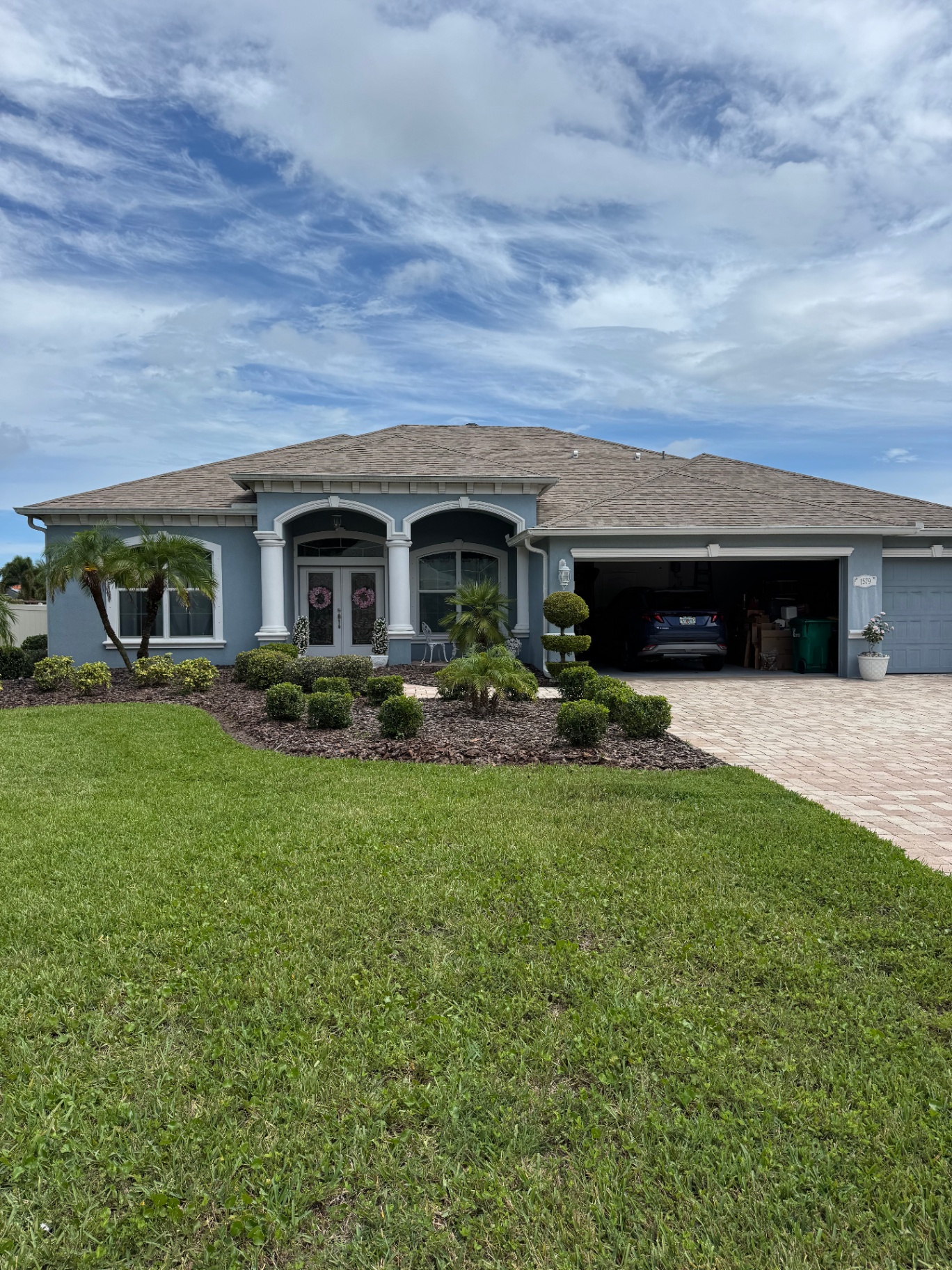
Florida roofs work harder than roofs almost anywhere else in the country. Constant UV exposure, high humidity, salt air drifting in from the Atlantic, and routine hurricane and tropical storm impact all conspire to shorten the useful life of every roofing material. Understanding how long your roof should last — and what cuts that life short on the Space Coast — is the first step toward planning a smart replacement instead of an emergency one.
Asphalt shingle roofs in Florida typically last 15 to 25 years. National manufacturer ratings of 25 to 50 years assume Midwest or Northeast climates. In Brevard County, those numbers shrink: 3-tab shingles often fail by year 12 to 15, and even premium architectural shingles rarely make it past year 20 on coastal homes. UV intensity bakes the asphalt binders, salt air corrodes fasteners, and repeated wind events lift tabs and break the seal between courses.
Standing-seam metal roofs in Florida last 40 to 70 years. Properly installed Galvalume, aluminum, or factory-painted steel resists corrosion, hurricane wind, and UV better than any other residential material. Coastal homes within a mile of the ocean should specify aluminum or stainless fasteners — galvanized fasteners corrode within a decade in salt-air environments. Metal's higher upfront cost is offset by lifespan, insurance discounts, and energy savings from reflective finishes.
Concrete and clay tile roofs in Florida last 50+ years. The tile itself can outlast the home, but the underlayment beneath it typically needs replacement at year 25 to 30. Many older Vero Beach and Indian River Shores tile roofs are now on their original underlayment from the 1980s and leaking despite intact tiles — a tile lift-and-relay project restores the roof without replacing the expensive tile.
What accelerates roof failure on the Space Coast. Coastal salt air is the single biggest factor. Homes in Cocoa Beach, Satellite Beach, Indialantic, Indian Harbour Beach, and barrier islands like Orchid and Indian River Shores see fastener corrosion and material degradation two to three times faster than inland homes in Palm Bay or West Melbourne. Add direct hurricane exposure — Brevard County has taken named-storm impacts from Frances, Jeanne, Matthew, Irma, Ian, and Nicole in just the past 20 years — and even a well-installed roof rarely outperforms its manufacturer rating.
When to repair vs replace. If your roof is under 15 years old and the damage is localized — a few missing shingles, a leaking pipe boot, a failed valley flashing — repair is almost always the right call. If your roof is over 18 years old, has widespread granule loss, multiple soft spots underfoot, or your insurance carrier has put you on a non-renewal notice, replacement makes more sense than throwing money at repairs. A free roof inspection will give you a clear photo-documented answer.
Brevard County specifics. Older Eau Gallie, downtown Melbourne, and Titusville neighborhoods often have 40 to 60 year-old homes on their second or third roof. Newer Suntree, Viera, and West Melbourne developments built in the 1995 to 2005 window are now entering the prime replacement age. HOA neighborhoods in Heritage Isle and Duran Golf Club enforce material and color standards, so always check covenants before committing to a roofing system.
Planning your next roof. The best time to plan a Florida roof replacement is before you have an active leak or an insurance non-renewal notice. Get a free roof replacement estimate well before your existing roof hits the end of its expected life — that lets you choose your material, your timing, and your contractor without pressure. ProCraft Renovations provides free, no-pressure inspections and written estimates anywhere in Brevard County or Indian River County.
Ready for a free estimate?
Licensed Florida roofing contractor #CCC1335912 — Brevard & Indian River County.